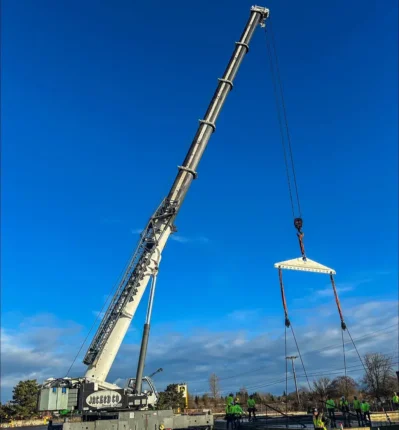
Navigating the regulatory landscape for heavy equipment in the Pacific Northwest requires careful planning, strict compliance, and precise coordination. Whether you are mobilizing along the dense I-5 corridor or setting up in high-density job sites across King County, this introductory guide outlines the primary state-level safety standards, municipal permitting processes, and regulatory risks project managers must account for when planning mobile crane operations.
From protecting underground utilities to securing high-density right-of-way corridors, compliance is essential to keeping projects safe, on schedule, and on budget.
Key Takeaways:
- Mobile crane operations in the Pacific Northwest must satisfy their respective state’s safety standards (Washington DOSH for WA builds; Oregon OSHA for OR builds) alongside local municipal right-of-way (ROW) requirements.
- Washington enforces stricter standards under WAC 296-155 Part L—including mandatory on-site Lift Directors—while Oregon aligns closer to federal OSHA standards under OAR 437.
- Site preparation requires verified soil load-bearing capacities, utility clearances, certified rigging crews, and approved Traffic Control Plans (TCP) with municipal lead times ranging from 5 to 20+ business days.
- Operating without required municipal permits or in violation of state safety codes risks immediate stop-work orders, steep administrative fines, invalidated liability insurance, and higher long-term EMR rates.
- By handling full permit filings, TCP drafting, and agency coordination directly within our hoisting services, Jacked Co eliminates administrative delays and guarantees day-one job site compliance in the Pacific Northwest.
Overview of Washington and Oregon Crane Laws
While federal OSHA sets baseline standards nationwide, Washington and Oregon operate independent state-plan programs with distinct regulatory frameworks.
Project managers operating across state lines must recognize that Washington (DOSH under WA L&I) enforces significantly stricter, standalone state codes compared to Oregon (OR-OSHA under OAR 437 Division 3), which aligns more closely with federal OSHA 1926 Subpart CC.
| Regulatory Factor | Washington (DOSH / WA L&I) | Oregon (OR-OSHA) |
| Primary Safety Code | WAC 296-155 Part L | OAR 437 Division 3 / 29 CFR 1926 Subpart CC |
| Designated On-Site Roles | Lift Director mandated (WAC 296-155-53401) on-site to directly oversee setup, rigging, lift plan execution, and safety protocols. | Qualified Rigger/Signalperson required; Lift Director roles follow standard federal guidance. |
| Assembly/Disassembly (A/D) | Strict A/D Director oversight required for all mobile crane setups and teardowns. | Qualified competent person must supervise A/D operations per manufacturer guidelines. |
| Ground Conditions | Verifiable firm/drained soil support required; explicit responsibility assigned to the Lift Director. | Ground conditions must meet equipment manufacturer specifications. |
| Power Line Clearances | Enforces strict minimum approach distances with formal de-energization or spotter protocols. | Follows standard federal clearance zones and spotter mandates. |
Addressing these foundational requirements early—particularly designating a certified Lift Director under WAC 296-155-53401 on Washington job sites—prevents costly operational delays when equipment arrives on site.
Understanding Street Shutdowns and Local Crane Permits
In addition to state safety codes, operating a mobile crane frequently involves navigating municipal right-of-way ordinances. When equipment occupies public space, swings over active thoroughfares, or sets up in city streets—whether for commercial utility placement or residential hoisting—local permits are legally required from agencies like SDOT (Seattle) or PBOT (Portland).
Municipalities throughout Washington and Oregon require detailed documentation before granting street or air-space access:
- Right-of-Way (ROW) & Street Closure Permits: If the crane, outriggers, or counterweight trucks occupy traffic lanes, street parking, or sidewalks, a formal ROW permit must be secured from the local department of transportation.
- Traffic Control Plans (TCP): Partial or full street closures require a professionally drafted Traffic Control Plan detailing detours, signage, flaggers, and pedestrian protection within the swing radius.
- Overdimensional Transport Permits: Transporting heavy or wide mobile cranes across state highways and city routes requires over-height or over-weight transport permits from WSDOT or ODOT prior to mobilization in the Pacific Northwest.
Because city transportation departments often require anywhere from 5 to 20+ business days to process right-of-way requests, early permit filing is critical to project timelines.
Legal Risks of Unpermitted Operations
Operating a crane without valid local permits or in violation of state safety standards carries immediate regulatory penalties. Municipal inspectors and state safety officers have the authority to issue immediate stop-work orders for unpermitted right-of-way use or unsafe site configurations.
Unpermitted work also introduces severe liability exposure. In the event of an incident or structural damage during an unpermitted lift, prime contractors face heavy administrative fines. Furthermore, regulatory non-compliance can invalidate project insurance policies, leaving contractors and property owners directly liable for third-party damages and legal claims.
Safety and Financial Risks of Regulatory Non-Compliance
State and local regulations exist to mitigate high-consequence site hazards. Skipping critical prerequisites—such as soil load assessments, utility clearances, or structured traffic management—increases the potential for site accidents and project disruptions.
Beyond site safety hazards, non-compliance creates substantial financial strain:
- Idle Crew and Equipment Standby Costs: A stop-work order forces paid standby time for specialized rigging crews, mobile equipment, and downstream trades while emergency permits are processed.
- Contractual Delays and Liquidated Damages: Schedule disruptions caused by regulatory holds can trigger liquidated damages clauses in commercial construction contracts.
- Elevated Insurance Rates: Safety citations issued by state enforcement agencies increase a contractor’s Experience Modification Rate (EMR), raising premium costs across future projects.

MINIMIZE YOUR RISK WITH Jacked Co
AVAILABLE 24/7
We do much more than lift and haul. Our deep-seated culture of safety and meticulous attention to detail help you manage your biggest risks. Call us today if you have questions or need a free, no-obligation estimate.

Leave your information below and we’ll be in touch
OR & WA Crane Regulation FAQs
Navigating the intersection of state safety standards and municipal right-of-way codes varies considerably whether your job site sits in the Greater Seattle Metro Area or operates within Multnomah County. Below are answers to common operational, regulatory, and insurance questions project managers face when coordinating heavy lifts in the region.
A lift is generally classified as critical if the load exceeds 75% to 85% of the crane’s rated capacity, involves multiple cranes (tandem lifts), hoists over occupied structures, or occurs near high-voltage lines or transit corridors. Critical lifts trigger elevated regulatory scrutiny, requiring formal written lift plans, specialized engineering reviews, and custom municipal permits from agencies like SDOT or PBOT.
Because requirements vary significantly depending on the site footprint, load weight, and local jurisdiction, contact the hoisting specialists at Jacked Co in the Pacific Northwest to evaluate your specific lift requirements and ensure full compliance.
A standard Commercial General Liability (CGL) policy is not sufficient to cover active lifting operations. Standard CGL policies contain a strict “Care, Custody, or Control” (CCC) exclusion. This means if a crane drops, damages, or destroys a load while rigging or hoisting it, your standard CGL policy will deny the property damage claim for that load.
To protect your site and equipment, you must verify the following coverages:
- Riggers Liability Endorsement: Waives or modifies the CCC exclusion to cover third-party property damage while the load is attached to the crane.
- Boom Damage / Equipment Breakdown Rider: Covers physical damage to the crane structure itself in the event of an overload or boom collapse.
- Excess / Umbrella Liability: Most urban ROW permits (SDOT/PBOT) require $5 million to $10+ million in primary and excess general liability naming the municipality as an additionally insured party.
Municipal lead times vary considerably between major regional corridors, largely driven by traffic volume and agency review backlog:
- Seattle (SDOT): Plan for 5 to 6 weeks for standard Street Use permit reviews. If SDOT requests plan revisions (Corrections Review), it can add another 4 to 6 weeks. Full street closures or high-impact arterial disruptions require submission well over two months in advance.
- Portland (PBOT): Standard Temporary Street Use Permits (TSUP) involving lane or street closures typically require at least 8 to 12 business days. However, if your setup requires meter reservations, advance warning signs must be verified on-site 72 hours prior to the permit start date, making the practical timeline roughly 10 to 12 business days.
Yes. Heavy mobile crane transports and urban site setups frequently cross multiple jurisdictional boundaries—such as moving a crane off a state highway (WSDOT or ODOT) onto a county road, then positioning it on a municipal city street.
Our turnkey hoisting services handle end-to-end permit coordination across all agencies:
- Overdimensional Transit: Simultaneous processing of WSDOT/ODOT oversize/overweight highway transport permits alongside county road agency approvals.
- Local Right-of-Way: Dual-filing for municipal ROW closures, parking meter reservations, and police escort details when operating across adjacent city boundaries.
- Inter-Agency TCPs: Designing unified Traffic Control Plans that satisfy overlapping standards between state transportation departments and local traffic engineers.
Ensure Day-One Compliance for Your Next Lift
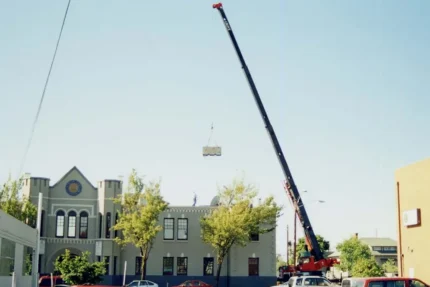
Executing complex mobile crane operations across the Puget Sound region and the Willamette Valley requires bridging the gap between state-mandated oversight and stringent municipal right-of-way compliance. Avoid costly agency corrections, stop-work orders, and schedule disruptions by working with Jacked Co. Our safety-focused team will manage your project’s regulatory logistics from start to finish.
From engineering stamp-ready Traffic Control Plans and securing SDOT, PBOT, WSDOT, or ODOT permits to providing certified Lift Directors under WAC 296-155-53401, we build full compliance directly into our hoisting scope. Contact our team today for a preliminary site access review and permit timeline evaluation for your next job site.