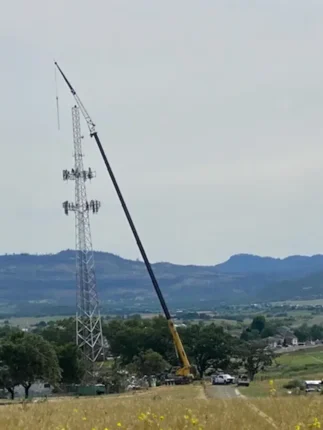
Executing complex, critical picks on a congested job site requires far more than heavy iron; it demands precise engineering. Investing in a comprehensive lift plan and lift study ensures that every variable — from ground conditions to rigging geometry — is accounted for before a single piece of equipment rolls onto the site.
What’s a Lift Study?
A lift study is an engineering evaluation designed to determine the physical and structural feasibility of a pick. Rather than relying on standard chart estimations, a formal study analyzes the complete physical environment to establish exact operating boundaries and margin-of-safety tolerances.
The Lift Study Process
- Crane Mechanics: Determining required boom length, minimum/maximum radii, counterweight configurations, and exact rated capacities across every phase of the swing in strict accordance with ASME B30.5 and ASME P30.1 standards.
- Site Survey & Assessment: Evaluating underground utilities, soil density, overhead obstructions, and spatial constraints at the job site.
- Load Dynamics Calculations: Establishing exact gross load values, center of gravity location, structural integrity under load, and aerodynamic wind resistance.
- Ground Bearing Capacity Analysis: Calculating dynamic outrigger/crawler loads to design matting, steel plating, or shoring configurations that prevent ground failure.

MINIMIZE YOUR RISK WITH Jacked Co
AVAILABLE 24/7
We do much more than lift and haul. Our deep-seated culture of safety and meticulous attention to detail help you manage your biggest risks. Call us today if you have questions or need a free, no-obligation estimate.

Leave your information below and we’ll be in touch
What’s a Lift Plan?
While a lift study proves that a pick is engineered to succeed, a lift plan translates that data into an actionable, step-by-step site procedure. It functions as the operational blueprint for the rigging crew, crane operator, project managers, and safety personnel.
Why Do You Need a 3D Lift Plan?
Using advanced CAD and 3D modeling tools, 3D lift plans start by constructing a digital replica of your job site. This allows engineering teams to simulate crane setup, boom movement, blind picks, and clearance limits in three dimensions.
Potential structural conflicts, tight tail-swing clearances, and overhead power line hazards are identified and resolved weeks before mobilization in full compliance with OSHA 1926.1407–1411 power line safety requirements
The Lift Planning Process
- Rigging Design: Specifying sling angles, spreader bars, shackles, turnbuckles, and load-securing hardware matched to exact load geometry.
- Site Logistics & Access: Mapping out transport routes, delivery staging, outrigger footprint placement, and Assembly/Disassembly (A/D) pads.
- Operational Protocols: Establishing site communication channels, dedicated hand/radio signal protocols, step-by-step hold points, and crew duty assignments.
Pre-Engineering Your Lift Keeps Your Project Moving
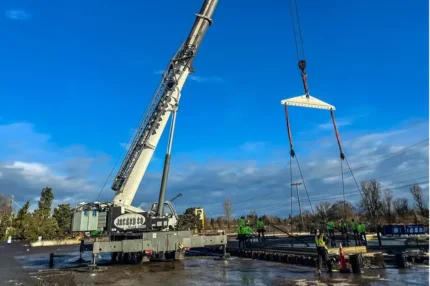
Time lost on a job site rarely stems from active lifting; it stems from unexpected delays during preparation, improper positioning, or unforeseen engineering conflicts. Detailed planning removes trial-and-error positioning, ensuring trades move continuously and equipment rentals are utilized at peak efficiency.
Don’t Risk It
Attempting a complex pick without an engineered, PE-Stamped plan exposes the site to severe risks:
- Equipment Instability: Outrigger punch-through, structural overload, or crane tipping.
- Load Damage: Improper rigging causing structural deflection, surface damage, or dropped loads.
- Project Shutdowns: Noncompliance with OSHA 1926 Subpart CC standards causing immediate work stop-orders, costly safety investigations, or extended trade delays.
Think of a lift plan like a binding operational contract. Deviating from specified boom angles, counterweight positions, or rigging configurations in the field invalidates all underlying calculations and poses a risk of structural failure.
When real-world site conditions shift unexpectedly—such as sudden weather events or unverified soil changes — Jacked Co evaluates and recalculates the plan to issue documented, safe field adjustments.
Lift Study & Lift Plan FAQs
An engineered lift study is typically mandated whenever a project meets the critical lift threshold—generally defined as any pick exceeding 75% to 85% of the crane’s rated capacity, lifts over occupied structures, or operations near high-voltage lines.
Project managers, insurance underwriters, and safety directors often require PE-stamped drawings for these operations to legally verify ground stability, secure municipal permits, and ensure full regulatory compliance.
Engineers evaluate the total dynamic weight by cross-referencing the physical load with the manufacturer’s published crane load charts, factoring in deductions for the hook block, overhaul ball, and wire rope weight.
The plan simultaneously calculates the overall rigging capacity—ensuring slings, spreader bars, and hardware maintain strict safety margins under dynamic wind loads and sling angle tension multipliers.
Our engineers establish strict go/no-go weather parameters within the lift plan, primarily based on maximum sustained wind limits, peak gust speed, and ambient operating temperatures.
Beyond standard wind-load capacity reductions for high-surface-area picks, our lift plans incorporate cold-weather steel derating — recalculating crane capacities and rigging safety factors to account for reduced fracture toughness in structural steel booms, shackles, and wire rope at sub-zero temperatures.
Choose Jacked Co When You Need a PE-Stamped Lift Plan
Critical picks rarely fail because a crane lacked rated capacity; they fail in the friction between disjointed subcontractors — when heavy haulers, rigging crews, and NCCCO-certified crane operators work off fragmented assumptions.
By managing the crane services lifecycle from permitting to highway transport to final pad setting across the Pacific Northwest, we eliminate costly communication gaps and ensure every calculation in your lift study translates flawlessly to the field. When your project timeline, site safety, and high-value assets demand zero tolerance for trial-and-error, partner with Jacked Co. With our custom lift studies and 3D lift plans, we turn high-risk picks into routine, precision execution.
Planning your next project? Reach out to Jacked Co today and request a detailed lift plan.