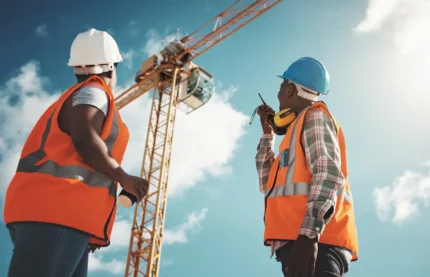
When a crane arrives on your job site, you’re bringing in one of the most powerful pieces of equipment in construction. That power can move mountains or cause serious problems if something goes wrong. At Jacked Co, we understand that safe crane operations are the foundation of everything we do.
Crane safety in construction is at the top of your priority list for tilt-up construction projects, coordinating HVAC equipment placements, overseeing industrial mill maintenance, and much more. And when you partner with Jacked Co, you’re working with a team that treats crane and rigging safety as a deep-seated part of our company culture (not just a checkbox on a form).
How Jacked Co Practices Safe Sites, Lifts, & Rigging
Here’s how we deliver safe crane services that protect your crew, your property, and your project:
NCCCO Certification
Every crane operator on our team holds certification from the National Commission for the Certification of Crane Operators (NCCCO). This is the gold standard for crane operation and rigging safety. It means our operators have passed rigorous testing and training requirements.
But we go further: every operator is certified for the specific equipment they run. No exceptions.
Our team also holds other certifications, including Telescopic Boom (both swing cab and fixed cab), Lattice Boom Crawler, Lattice Boom Truck, Signalperson, Rigger Level I, Rigger Level II, and Lift Director credentials.
Engineered Lift Plans & 3D Modeling
We eliminate guesswork by providing fully engineered lift plans and advanced 3D modeling before the crane ever makes a hoist. This critical planning accounts for load dynamics, site clearance, structural limits, ground conditions, and other mission-critical factors.
A lift study creates a highly detailed technical blueprint, while the lift plan translates that into real-world mechanics. When our crane operators arrive on your site, they know exactly what to expect and how to execute safe crane lifts.
Strict OSHA Compliance & Third-Party Safety Programs
We maintain strict compliance with all OSHA regulations governing crane operations. But we don’t stop there.
Jacked Co is also certified through rigorous third-party safety organizations like ISN Net and ABC. These programs provide independent verification that our safety practices meet the highest industry standards.
When you work with us, you can be confident that our crane and rigging safety protocols have been thoroughly vetted.
Specialized Equipment for Challenging Conditions
Sometimes standard equipment isn’t enough for safe crane operations. That’s why we’ve invested in specialized gear for difficult situations.
Our fleet includes non-marking tire mobile cranes for sensitive surfaces, compact electric-powered lifting equipment for indoor environments, and specialized rigging for picks that other companies might call impossible. For moving extremely heavy loads in tight spots, we utilize advanced jack-and-slide systems where standard cranes cannot operate safely.
We also make sure our cranes are properly matched to each job. Our fleet ranges from smaller, highly maneuverable all-terrain cranes to massive machines with 500-ton lift capacity.
Comprehensive Insurance Coverage
Even with the best safety practices, unexpected circumstances can occur. That’s why Jacked Co carries a comprehensive $10 million umbrella insurance policy.
This expansive coverage provides you with complete protection and peace of mind. So when you hire us, you’re not exposing your business to unnecessary liability.

MINIMIZE YOUR RISK WITH Jacked Co
AVAILABLE 24/7
We do much more than lift and haul. Our deep-seated culture of safety and meticulous attention to detail help you manage your biggest risks. Call us today if you have questions or need a free, no-obligation estimate.

Leave your information below and we’ll be in touch
Our Guidelines for Safe Crane Lifts
Every lift we perform follows a careful process designed to maximize safety at every step. Here’s what that looks like in practice:
- Thorough Site Assessment: Before any equipment arrives, we evaluate the job site. Our team examines ground conditions, identifies potential obstacles, locates overhead power lines, and assesses access routes. We look for factors that could affect crane stability or load paths.
- Detailed Pre-Lift Planning: Based on our site assessment, we develop a comprehensive lift plan. This includes calculating load weights, determining rigging configurations, establishing crane positions, and plotting swing paths. We account for site clearances and identify any areas where special precautions are needed. For complex lifts, we use 3D modeling to visualize the entire operation before it happens.
- Equipment Inspection & Setup: On lift day, our operators conduct thorough inspections of all equipment. Cranes, rigging, and supporting gear are checked for any signs of wear, damage, or malfunction. Outriggers are positioned on properly rated pads, with ground bearing pressure verified. Nothing moves until we’re confident everything is in proper working order.
- Clear Communication Protocols: During the lift, clear communication is essential. Our teams use established hand signals and radio protocols to make sure everyone knows what’s happening at all times. Designated signalpersons coordinate movements, and our Lift Directors oversee the entire operation. There’s never any confusion about who’s in charge or what the next step is.
- Continuous Monitoring: Even with perfect planning, conditions can change. Our operators continuously monitor wind speed, load behavior, and equipment performance throughout every lift. If conditions become unsafe, we stop. Period. No schedule pressure or cost consideration ever overrides our commitment to safe crane operations.
Site and Safety Concerns Our Crews Account For
Let’s be direct: cranes are inherently dangerous. We’re talking about machines capable of lifting hundreds of tons, swinging massive loads through the air, and operating in unpredictable environments.
When crane and lifting safety protocols aren’t followed, the consequences can be devastating. Here are the factors our crews assess and address for the safe use of cranes:
- Ground Failures & Tip-Overs: Ground bearing pressure is a critical factor that many operators overlook. Soft soil, uneven terrain, hidden underground voids, or improperly placed outrigger pads can cause a crane to shift or tip over entirely.
- Contact With Power Lines: Even getting close to power lines (without actually touching them) can create an electrical arc that puts everyone nearby in danger. Safe use of cranes requires careful site assessment and maintaining proper clearance distances at all times.
- Load Failures & Drops: When rigging isn’t properly configured, loads can shift, swing, or fall. This can happen due to incorrect sling angles, damaged rigging equipment, improper load calculations, or sudden wind gusts.
- Swing Path Collisions: Without proper planning, the crane’s boom or load can collide with buildings, equipment, other workers, or obstacles that weren’t accounted for. These collisions can cause significant damage and injuries.
- Weather-Related Incidents: Wind, rain, lightning, and even temperature changes can affect crane operations. High winds can cause loads to swing unpredictably. Rain can affect ground stability. Lightning presents obvious dangers.
- Mechanical Failures: Cranes are complex machines with many components that can fail. Hydraulic systems, cables, brakes, and structural elements all require regular inspection and maintenance.
Emergency Responses: When the Unexpected Happens
Sometimes safety means responding quickly to an emergency. Jacked Co is available 24/7 for critical lifting needs, including overturned equipment recovery and structural failure stabilization.
When disaster strikes, you need a team that can respond swiftly while still maintaining rigorous safety standards. Our after-hours calls go directly to key operational members, getting the ball rolling quickly.
We deploy experienced crews who know how to assess emergency situations and execute safe crane lifts under pressure.
Your Partner for Long-Term Safety Success
Need crane services in Oregon or Washington? Trust Jacked Co for industrial crane safety you can count on. Our NCCCO-certified operators, engineered lift plans, strict adherence to regulations and permitting requirements, and deep-seated safety culture ensure every lift is executed with maximum efficiency and minimum risk.
Don’t leave your next lift to chance. Whether you’re planning a complex construction project or facing an emergency situation, Jacked Co is ready to help.
We’re independently owned and operated right here in the Pacific Northwest. We’ll never try to fit you or your project into a preexisting box. Instead, we listen carefully to your goals and create custom project plans that address your unique safety concerns.
Contact us today for a free, no-obligation estimate and see why we’re the Pacific Northwest’s leader for safe crane operations. Call 503-543-1050 or request a quote online here.