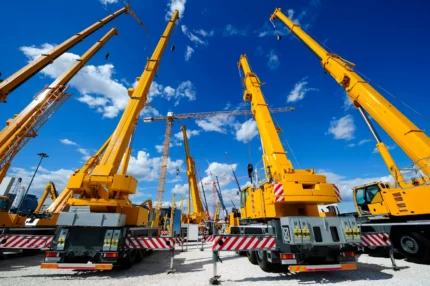
When you need to lift heavy equipment, HVAC units, steel beams, or other materials, hiring the right crane service is essential.
But before any crane arrives at your job site in Oregon or Washington, there’s important information you’ll need to provide. The more prepared you are with answers to these questions, the safer and smoother your lift will be.
As crane experts, we at Jacked Co have seen what happens when customers come to us without the right information, and we’ve seen how easy the process becomes when they’re prepared.
What We’ll Ask Before Bringing Out a Crane
What Is the Weight of the Load Needing Lifting?
This is the most fundamental question in any crane operation, and it’s one that cannot be estimated or guessed. A safe lift is simply not possible when the weight of the load isn’t known and verified. Too many accidents happen because someone assumed they knew how much something weighed.
For smaller loads like a bucket of concrete or a standard steel beam, calculating weight is straightforward. But for larger or more complex items, you’ll need documentation.
If your materials were shipped to the job site by truck, the trucking company’s weight ticket is an excellent source for this information. Manufacturer specifications can also provide accurate weights for equipment like HVAC units, generators, or machinery.
What Is the Size and Type of Material Being Lifted?
Be prepared to share the type of materials you need lifted, the verified weight, and the dimensions, including length, width, and depth. For irregularly shaped items, let us know about any protruding parts or uneven weight distribution. This information helps us determine the right rigging configuration for your load.
The rigging system (the slings, shackles, and other hardware that connect the load to the crane hook) must be properly sized and configured for each specific lift. The capacity of the rigging is limited by its weakest link, so we calculate everything carefully.
What Are the Ground Conditions at Your Site?
When you factor in the additional weight of the load being lifted, the pressure on the ground beneath the outriggers becomes enormous. If the ground isn’t firm and level, the crane can shift or even tip during a lift.
We always use matting under our crane outriggers without exception. The small outrigger pads that come standard with cranes aren’t designed to work alone. They don’t distribute the load enough to be safe on most soil types. Proper matting spreads the weight over a larger area, protecting both the crane and your property.
You should also let us know if there’s been any recent excavation in the area where you want to set up the crane. Freshly disturbed soil doesn’t have the same bearing capacity as undisturbed ground, even if it’s been backfilled.

MINIMIZE YOUR RISK WITH Jacked Co
AVAILABLE 24/7
We do much more than lift and haul. Our deep-seated culture of safety and meticulous attention to detail help you manage your biggest risks. Call us today if you have questions or need a free, no-obligation estimate.

Leave your information below and we’ll be in touch
Are There Any Underground Utilities We Need to Know About?
This is a question that’s easy to overlook, but ignoring it can lead to serious problems. Before any crane arrives at your site, you need to identify what’s beneath the surface.
Underground hazards include:
- Water and sewer lines
- Gas pipes
- Electrical conduits
- Culverts
- Septic tanks
- Wells
- Irrigation or sprinkler systems
Remember, cranes weigh many tons. That weight, concentrated through the outriggers, can easily crush underground pipes or collapse septic systems. Hitting a gas line or electrical conduit creates immediate safety hazards for everyone on the site.
Are There Power Lines Anywhere Near the Work Area?
This actually isn’t a simple yes-or-no question. We need to know the height of any power lines and their distance from where you want to set the crane, where the load will be picked up, and where it will be set down. Power lines could potentially affect where we position the crane or the path the load needs to travel.
Power line contact is the most common crane accident worldwide. These accidents outnumber all other types of crane accidents combined, which is why we take overhead electrical hazards seriously.
Are There Any Other Obstructions in the Path of the Lift?
Beyond power lines, many other obstacles can interfere with a crane operation. Trees, buildings, light poles, signs, fences, and other structures all need to be identified before the lift begins.
Why Does All This Information Matter?
The answer is simple: safety.
Crane accidents happen when critical information is missing or wrong. When the weight of a load is underestimated, when power lines aren’t identified, when ground conditions aren’t properly assessed. These are the situations that lead to tipped cranes, dropped loads, and serious injuries.
By gathering accurate information upfront, we can create a proper lift plan. This plan accounts for the crane’s capacity at specific configurations, the weight of the load plus all rigging equipment, any hazards in the work area, and the sequence of operations needed to complete the lift safely.
When a crane operates near its maximum capacity, there’s very little margin for error. Everything has to be exactly right. If something goes wrong, it happens fast, and there’s little chance to recover. That’s why we take planning so seriously.
Ready to Plan Your Lift?
If you have a project in Oregon or Washington that requires crane services, we’re here to help. The more information you can provide about your lift, the better we can serve you.
With decades of experience, we’ve handled lifts of all sizes and complexities. From straightforward equipment moves to challenging critical lifts, we have the expertise and equipment to get the job done safely.
Contact us today to discuss your crane rental needs. Our team is ready to answer your questions and help you plan a successful lift.