Choosing the right construction crane can make or break your project timeline and budget. We’ve seen it happen too many times: a contractor picks the wrong crane type, and suddenly they’re dealing with delays, safety concerns, and unexpected costs.
We’ve built our business here at Jacked Co around preventing these problems by helping you understand exactly what each crane brings to the table. Because when you pick the wrong crane, you can waste money on equipment that can’t perform. You lose time waiting for the right machine to arrive. Worst of all, you put your crew at risk.
There’s a crane designed for exactly what you need, whether you’re building a high-rise downtown or working on a bridge in rough terrain. The ground conditions, available space, lift height, and load weight all play a role in determining which construction site crane will get the job done safely and efficiently.
Mobile Cranes
Mobile cranes have changed the game for construction projects that need versatility. These machines are designed to move around your job site during a project, making them perfect when you need to lift and relocate materials quickly. They either have their own propulsion system or sit on wheeled or tracked frames that let them travel across sites and even public roads.
Crawler Cranes
If your construction site has soft soil or uneven terrain, a crawler crane is your best pick. These powerful machines sit on tank-like tracks that spread their weight across a larger area. This design gives them incredible stability even on ground that would cause other mobile crane types to sink or tip.
Crawler cranes can handle massive loads, and some models lift over 3,000 tons. They also have a unique “pick-and-carry” ability, meaning they can lift a load and move it to another location without setting it down first. This saves time when you need to reposition heavy materials around your job site.
It’s important to note that crawler cranes require assembly once they arrive, so plan your timeline accordingly.
All-Terrain Cranes
All-terrain cranes solve a problem many contractors face: getting a capable machine to a remote site without spending days on transport. These mobile construction cranes drive at highway speeds to reach your location, then use their all-wheel drive and special steering to navigate rough job site conditions.
Think of an all-terrain crane as the Swiss Army knife of crane types. It handles both the journey to your site and the challenging conditions once it arrives. For projects where you need a construction crane that can do it all, this option often makes the most sense.
Rough Terrain Cranes
Rough terrain cranes shine when some job sites don’t have paved roads or smooth surfaces anywhere nearby. These machines run on four large rubber tires with four-wheel drive, designed specifically for off-highway work on rugged construction sites.
Unlike all-terrain models, rough terrain cranes can’t drive themselves on public roads. You’ll need to trailer them to your location. However, once they arrive, they handle unpaved, muddy, or rocky ground better than almost any other mobile crane type.
If your building crane needs to work where conditions are harsh, a rough terrain crane delivers the performance you need.
Carry Deck Cranes
Not every lift happens outdoors with plenty of room to maneuver. Industrial plants, warehouses, and renovation projects often have tight aisles and limited clearance. Carry deck cranes were built for exactly these situations.
These small, low-profile machines have four wheels and a rotating boom, plus a flat deck above the wheels. They can pick up a load, drive it to a new location, and set it down: all in spaces where larger mobile cranes simply wouldn’t fit.
So if your project involves indoor lifting or cramped conditions, a carry deck crane gives you capability without the footprint.

MINIMIZE YOUR RISK WITH Jacked Co
AVAILABLE 24/7
We do much more than lift and haul. Our deep-seated culture of safety and meticulous attention to detail help you manage your biggest risks. Call us today if you have questions or need a free, no-obligation estimate.

Leave your information below and we’ll be in touch
Tower Cranes
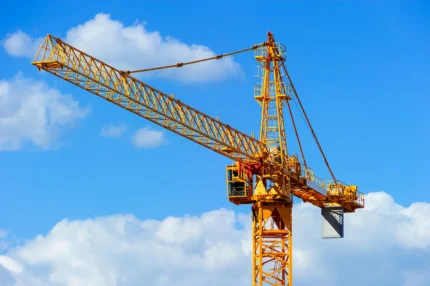
When your project reaches toward the sky, tower cranes become essential. These are the iconic building cranes you see dominating city skylines during major construction. Fixed cranes like these anchor in place for the entire project duration, offering extreme height and continuous lifting power that mobile options simply can’t match.
Hammerhead Tower Cranes
The hammerhead tower crane is what most people picture when they think of types of tower cranes. It features a fixed horizontal arm called a jib, with a trolley that moves loads along its length. This design lets operators position materials precisely, even hundreds of feet in the air.
These building construction cranes dominate high-rise projects because they combine massive reach with impressive lift capacity. The fixed position means they can work continuously without repositioning, keeping your project moving at full speed.
If you’re building anything over a few stories, a hammerhead tower crane probably belongs on your equipment list.
Luffing Jib Tower Cranes
Building in a dense urban area creates a unique problem: your crane’s arm might swing into neighboring buildings or other cranes on adjacent sites. Luffing jib tower cranes solve this issue with a jib that raises and lowers vertically instead of staying horizontal.
This “luffing” motion lets operators work within tight airspace restrictions. The jib tucks upward when needed, avoiding conflicts with surrounding structures. For downtown construction where every inch of space matters, this type of tower crane keeps your project compliant and your neighbors happy.
Self-Erecting Tower Cranes
Traditional tower cranes require a separate mobile crane just to assemble them. Self-erecting tower cranes skip that step entirely. These compact machines fold out automatically once they arrive on site, getting you lifting capability without the cost and complexity of a secondary assist crane.
A self-erecting model works as a sort of mobile tower crane hybrid. It transports easily and sets up quickly, but still provides tower crane performance. They’re popular for low-rise residential construction and smaller commercial projects where a full hammerhead crane would be overkill. You get tower crane reach without tower crane hassle.
Fixed Cranes
Beyond tower cranes, several other fixed crane types serve specific purposes on construction and industrial sites. These machines stay in one position, providing continuous lifting exactly where you need it.
The A-Frame (or stiffleg derrick) is one of the oldest fixed crane designs still in use. It consists of a central mast held upright by rigid steel legs anchored to the ground or a building frame. You’ll find these cranes in heavy industrial applications and specialized construction scenarios where their unique geometry provides advantages.
Overhead cranes, gantry cranes, and jib cranes also fall into the fixed category. While less common on traditional construction sites, they play crucial roles in manufacturing facilities, shipyards, and material handling operations.
Crane Types for Your Specific Project Needs
After years in this industry, we’ve learned that the best crane for your project depends on answering a few key questions:
- What’s the maximum weight you need to lift?
- How high do those loads need to go?
- What are your ground conditions like?
- How much space do you have to work with?
For high-rise building construction, tower cranes almost always make sense. The reach and capacity justify the installation time and cost. For shorter projects or sites without the footprint for a tower crane, mobile cranes offer the flexibility you need.
Ground conditions matter more than many contractors realize. Soft soil, slopes, or muddy conditions can turn a routine lift into a dangerous situation with the wrong equipment. Crawler cranes and rough terrain cranes exist specifically to handle these challenges safely.
Space constraints push many projects toward specialized equipment. A carry deck crane in a tight industrial plant or a luffing jib tower crane in a crowded cityscape can be the difference between a successful project and a logistical nightmare.
Get the Right Equipment for Your Construction Project
We know that navigating crane types can feel overwhelming. The differences between a rough terrain crane and an all-terrain crane might seem minor on paper, but they make a huge difference on your actual job site.
That’s why Jacked Co is here to help. Our team has the experience and equipment to match exactly the right crane to your project. We’ll look at your site conditions, lift requirements, and timeline to recommend the construction site crane that delivers results without wasting your budget on equipment you don’t need.
Contact us today to discuss your next project and discover why so many contractors trust us to get the job done right.